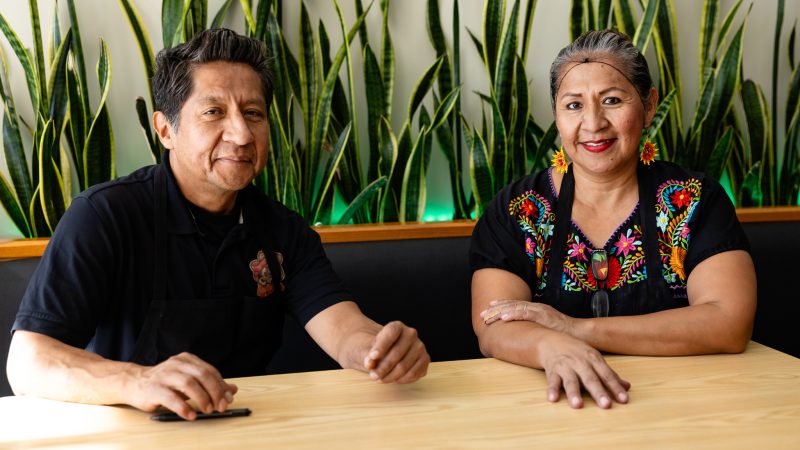
On a Monday morning in October, a sister and brother crunch numbers and trade ideas for growing their fledgling Mexican eatery at 1 Kelley Square in Worcester.
Maria Guadalupe Rodriguez, 55, and Rosalio Carmona, 52, have big ambitions for El Sombrero Taqueria, which they opened in 2022. With another location at the Solomon Pond Mall in Marlborough and a potential third on Park Avenue in Worcester, the siblings are determined to move beyond survival.
“We don’t want to stay small,” Rodriguez said. “We want to grow.”
But growth requires cash. Rising food costs are squeezing margins, and the owners anticipate raising prices. Other neighborhood restaurants have closed under financial pressure.
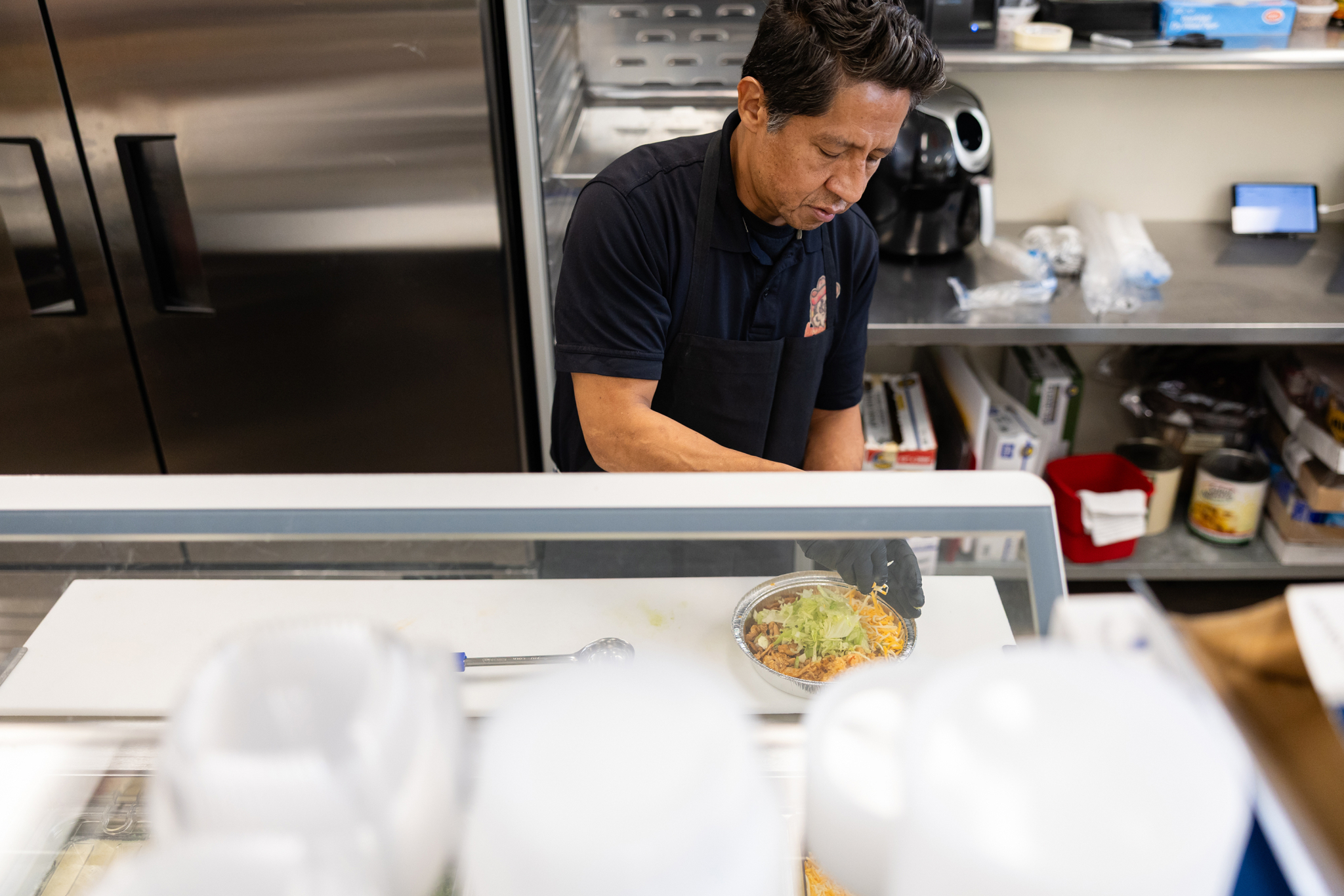
Carmona, who studied hospitality at Quinsigamond Community College and works in the kitchen at The Beechwood Hotel in Worcester, invests his earnings in the business. Rodriguez, the chef, pursues new revenue through pop-up events at local employers and a new takeout concept called Snackeria. Her children and nieces work there.
One of nine children, Rodriguez learned to cook from her mother and grandmother, both chefs. She remembers her mother selling food to neighbors in Mexico, followed by her young son carrying a pot of steaming food.
Today, she draws on that entrepreneurial spirit.
“We have to keep going with quality, passion, and love,” she said.
Yet determination alone cannot overcome financial barriers. Starting or expanding a business requires capital, and those without home equity, family wealth or other assets often struggle to secure it.
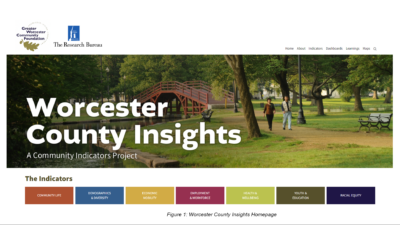
Less than 1 percent each of employer businesses in Worcester County are owned by Black and Hispanic people, far below national rates, according to Worcester County Insights, a data initiative from Greater Worcester Community Foundation and Worcester Regional Research Bureau. Those figures exclude sole proprietors and businesses without paid employees, including many small enterprises operated by entrepreneurs of color.
Conventional financing can be particularly difficult without collateral or an established financial track record.
Rodriguez and Carmona know this firsthand. The siblings previously operated another Worcester restaurant that shuttered during the Great Recession. When they tried again in 2022, financing came from a brother working in Mexico's petroleum industry, rather than a bank.
Rodriguez wouldn't risk the four-bedroom Shrewsbury home she and her husband purchased in 2005. Carmona had no property to leverage.
A home of his own
Even as he invests in the business, Carmona is pursuing another financial goal: homeownership.
He hopes to buy a mobile home in Worcester, a modest aspiration competing with the money he directs toward El Sombrero. His circumstances illustrate how business ownership and homeownership are intertwined. Property provides equity for business financing, while business income can help families save for a home. Without either, building wealth becomes harder.
Carmona sees new condominiums rising throughout Worcester and wonders who can afford them as interest rates rise and home prices remain higher than the national median.
The numbers suggest his concerns are well-founded. According to WCI, Black and Hispanic homeownership rates in Greater Worcester stand at 33 percent, compared with 71 percent among White residents.
Nationally, rates are higher among Black and Hispanic households, although disparities persist. A 2025 National Association of Realtors report found the White homeownership rate was 72 percent in 2023, compared with 51 percent among Hispanic households and 45 percent among Black households.
The business ownership gap is similarly pronounced. According to the U.S. Census Bureau, 22.6 percent of U.S. employer firms were minority-owned in 2022, far exceeding the reported share of Black- and Hispanic-owned employer businesses in Worcester County, although the figures use different racial and ethnic groupings and aren't directly comparable.
Industry help?
Closing these gaps requires financing and institutions willing to help prospective owners navigate the process.
Darryl Caffee, senior vice president of home lending at Auburn-based Webster Five bank, understands the importance of representation in an industry where people of color remain underrepresented.
Caffee, who is Black, graduated from law school in 2012, entered banking as an in-house attorney and joined Webster Five in 2018. Today, he connects aspiring homeowners with mortgage products offering reduced down payments and first-time homebuyer incentives.
Those efforts have become more difficult since 2025, as federal guidance on creating programs to help lenders address social needs in homebuying has shifted under President Donald Trump’s administration.
In 2022, federal regulators issued a statement telling lenders that creating special programs to encourage homeownership among people of color does not violate federal regulations, which generally forbid race-based lending and were ostensibly established to protect people of color from discrimination in banking.
The Trump administration rescinded this guidance in August, saying the 2022 interpretation under President Joe Biden’s administration couldn’t be reconciled with the Equal Credit Opportunity Act or the Fair Housing Act.
To comply with this new federal guidance, Webster Five now emphasizes income-based eligibility criteria. Programs through the Massachusetts Housing Partnership and Fannie Mae provide options beyond conventional mortgages.
“You have to have access to those products and programs. Otherwise, you’re really at the whim of what your portfolio will allow you to do,” Caffee said.
For Alexander Hayden, 26, that access helped turn ambition into investment.
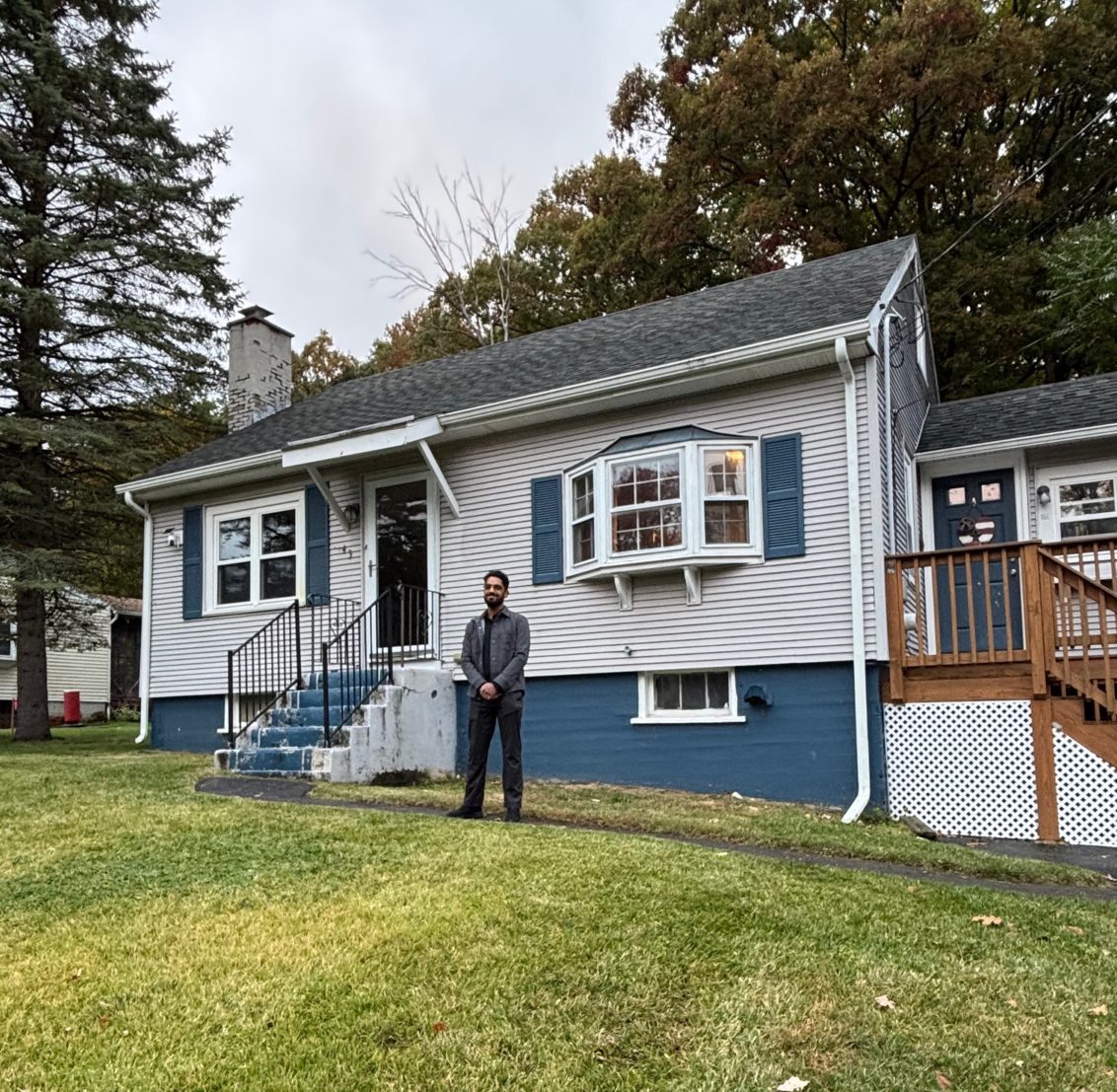
Hayden, a Worcester Housing Authority construction project manager, grew up in Shrewsbury after his family moved from Montreal. He hopes to build a multifamily property portfolio and eventually provide concierge services to tenants.
Of African descent, Hayden doesn’t fall into the category of White privilege, but he acknowledges advantages that many buyers lack. His mother allowed him to leverage her Shrewsbury multifamily property. Still, larger banks showed little interest in his plans.
At Webster Five, he found personalized assistance. Using first-time homebuyer incentives and leveraging his mother's property, Hayden purchased a small Cape-style home he hopes to convert into a multi-unit property. His mother is a silent partner.
“I want to say I tried something, and if it fails, it fails,” Hayden said.
His experience illustrates what's possible when family assets, financing programs and lending assistance converge, as well as the disadvantages facing those without such resources.
For entrepreneurs lacking substantial collateral, conventional financing can be especially difficult.
Credit Scores, By Race
In lending, credit scores are among the most important factors in deciding approvals, but credit scores among non-White borrowers on average tend to be lower than those of their White counterparts. Historic racism that led to policies such as redlining made it impossible for people of color to own homes in certain neighborhoods. This created an inequitable credit system for non-Whites that persists in average credit scores today.
Think small
Overall, business loan approval rates are relatively high. A March 2025 Federal Reserve report found that, in 2023, 75 percent of applicants seeking loans, lines of credit or cash advances from small banks received at least some funding, compared with 66 percent of applicants at large banks.
But denial rates vary by race and ethnicity. According to the Federal Reserve's 2025 report on small-business financing, 18 percent of White-owned businesses were denied financing, compared with 39 percent of Black-owned businesses and 29 percent of Hispanic-owned businesses. The figures come from a 2024 nationwide survey of small employer firms.
Such disparities point to institutional bias, said Monica Thomas-Bonnick, Webster Five vice president and commercial lending officer. A Black woman and industry veteran, she's focused on leveling the playing field.
“People who look like me are not in the vast majority of those who own businesses,” Thomas-Bonnick said. “We have not had access to the same things, on purpose.”
Rather than accept those barriers, she advocates providing technical assistance and educating borrowers about loan requirements, particularly the importance of improving credit scores. That personalized attention lengthens the sales cycle, something not every bank embraces, she said.
“Once you educate them and you show you care about them being able to access capital, they start to put things into place to help them reach that goal of business ownership,” said Thomas-Bonnick.
Connecting with such lenders is crucial, said Elizabeth Cruz, president of the Worcester-based Latin American Business Organization.
Cultural attitudes, including distrust of financial institutions and reluctance to discuss personal finances, can discourage Latino borrowers, Cruz said.
Equally important is knowing where to find resources. LABO connects entrepreneurs with city government-backed grants, pitch competitions and Worcester Regional Chamber of Commerce membership.
Cruz challenges the perceptions that Hispanic business ownership is minuscule. According to the U.S. Small Business Administration's 2025 Massachusetts Small Business Profile, Hispanic entrepreneurs owned 70,512 businesses statewide, representing 9.9 percent of businesses. More than 92 percent had no employees, excluding them from federal employer-business statistics. The figures are based on 2022 Census data.
“I tell our members, ‘Hey, you’re making these great contributions in this country,’” Cruz said.
It's a message Rodriguez, of El Sombrero Taqueria, embraces. A LABO member, she received a $25,000 City of Worcester grant for kitchen equipment. Although previously unsuccessful in obtaining a business loan, she plans to try again to support expansion in 2027. She believes entrepreneurs must advocate for themselves, seek resources and find lenders willing to hear their stories.
She's hopeful someone will listen when she applies for a loan once again.
“I’m not 100-percent confident that we’re going to get it, but we’re going to try,” Rodriguez said.
This story was commissioned by Greater Worcester Community Foundation through the Worcester County Insights Reporting Project. The project supports independent reporting on issues affecting Worcester County communities.
Disclosure: The Latin American Business Organization, one of the sources of information for this article, has received funding from Greater Worcester Community Foundation.